Bergamasco Care & Grooming
The Bergamasco requires a high-quality diet, regular exercise, and a devoted family. This is a breed that wants to live closely with its people and be part of daily life.
General Care
Bergamascos can sometimes be picky eaters, so their diet should be nutritious and thoughtfully chosen.
Although they are herding dogs with protective instincts, they are not livestock guardian dogs. The Bergamasco is meant to live in the home with its family, not apart from people or out with livestock.
Bergamascos are often considered more hypoallergenic than some other breeds, but they can still trigger allergies in sensitive individuals.
They are also a slow-maturing breed and are not physically mature until around two years of age, when growth plates have closed.
Above all, the Bergamasco requires attention, love, devotion, and thoughtful care. In return, they give back tremendously.
The Flocked Coat
The Bergamasco coat is one of the breed’s most distinctive features. It is made up of three types of hair: the undercoat, the woolly coat, and the harsher outer coat often called “goat hair.” Together, these textures weave into the characteristic flocks.
Flocks are different from cords. They are generally flat and wide, and they form across the body according to the type and concentration of hair in each area.
Flocking usually begins between about 7 and 14 months of age, depending on the individual dog. At first, the coat begins to clump and mat, and these sections must be separated by hand. Timing is important during this stage. Once the flocks are established, the coat will continue to require regular maintenance.
Bergamascos do shed their puppy coat, but as adults they generally do not shed in the usual sense. Their coats do, however, collect outdoor debris such as leaves, pine needles, and similar material.
The coat itself has very little odor, but it can mildew if it becomes soaked and is not dried properly. While it naturally repels mist and light rain, a Bergamasco that gets wet through the flocks needs to be dried thoroughly.
The coat continues to grow throughout the dog’s life, and in general, coat length often reflects the age of the dog.
The surface of the flocks can be brushed lightly with a slicker brush to remove debris, while the head and face can be brushed normally. An ideal coat is lighter in the front so that it does not interfere with reach and movement.
There should be visible skin around each flock. The coat should not be matted tightly to the skin, and a small space between the flocks allows for air circulation.
Flocks also provide warmth, insulation, and protection from the elements.
Variations in Coat and Color
Below are some of the basic colors seen in the breed. There are many variations within each color, and not all are shown here.
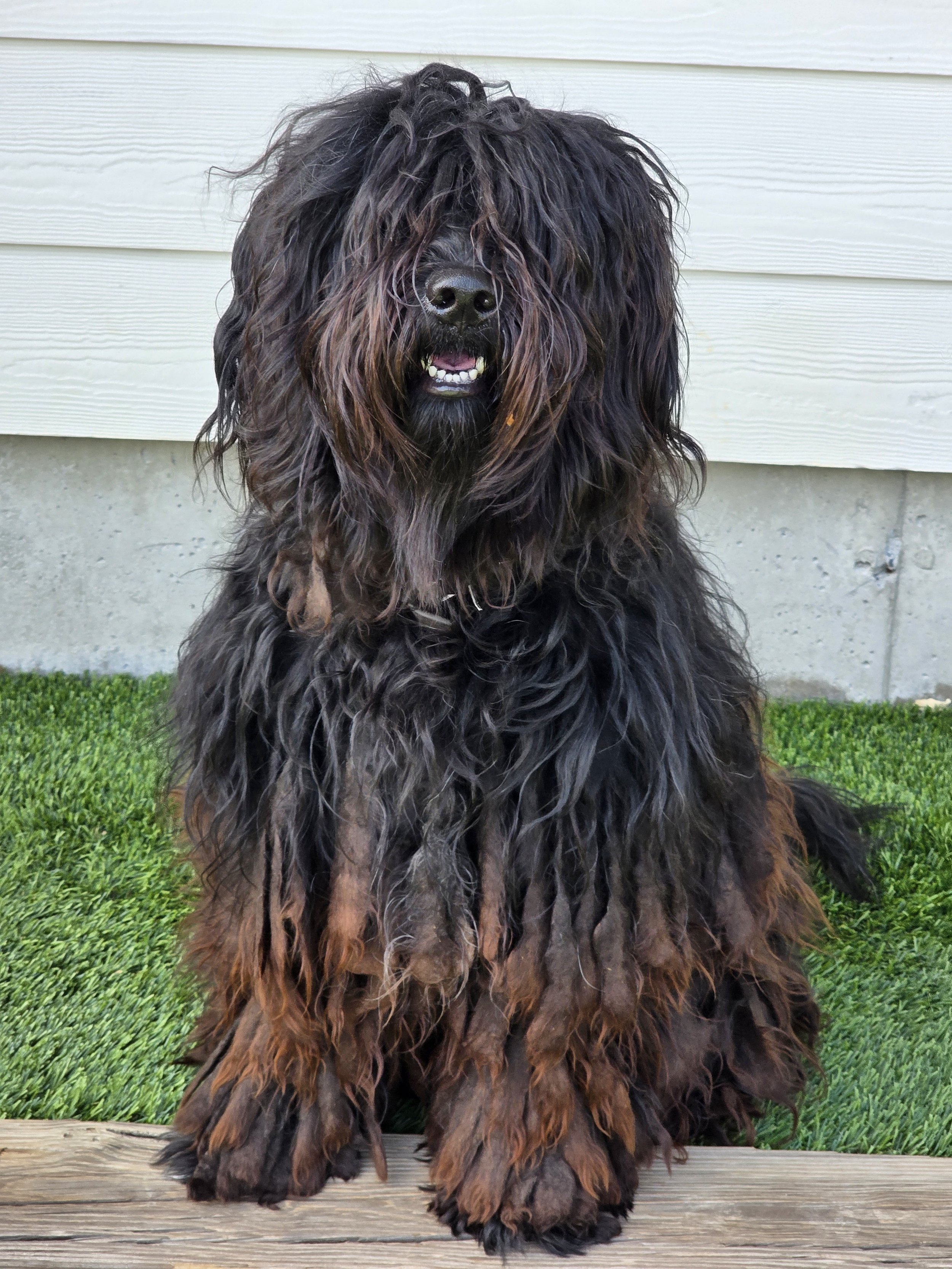
Adult black female 3 years old
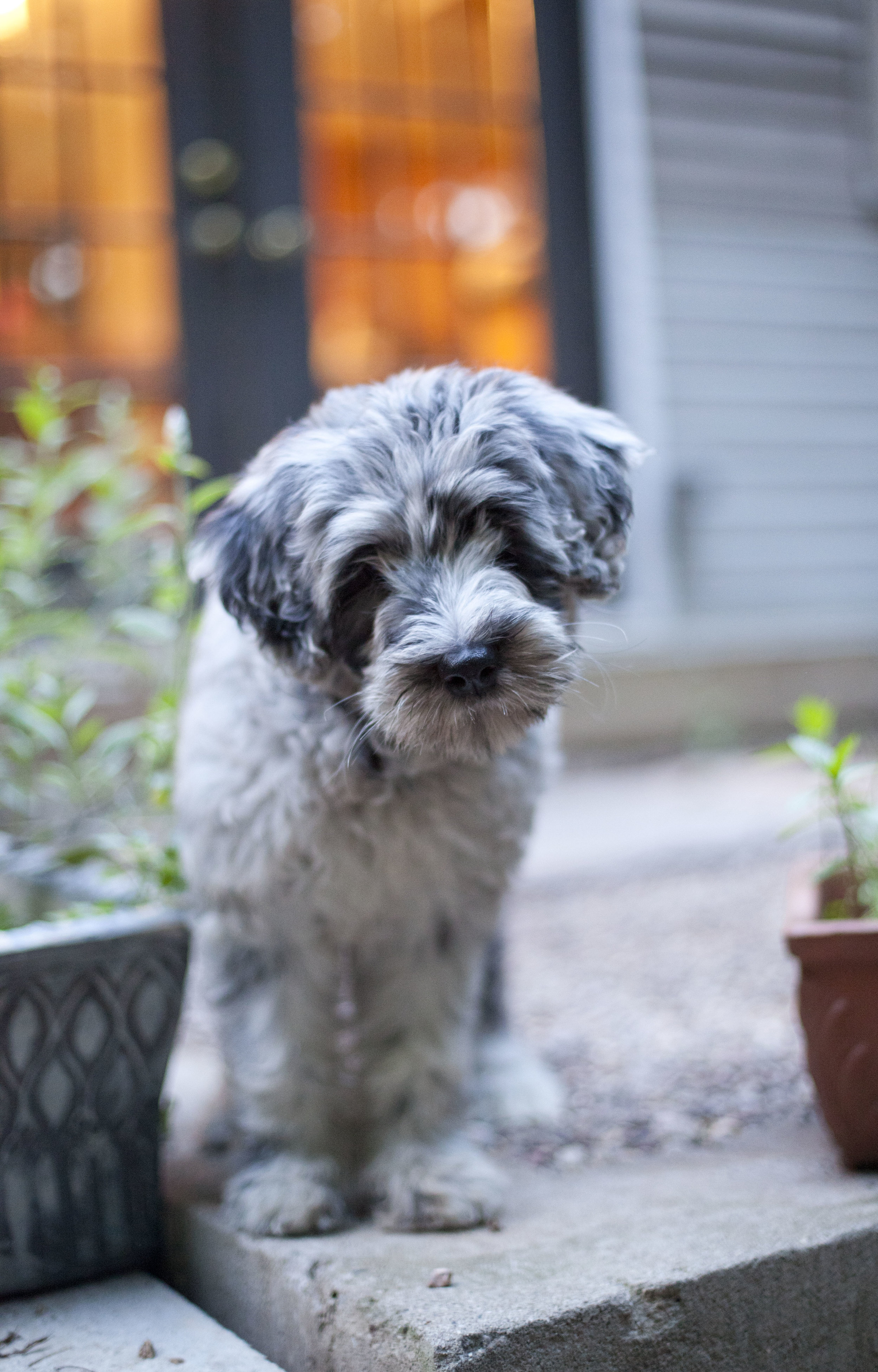
Merle female puppy
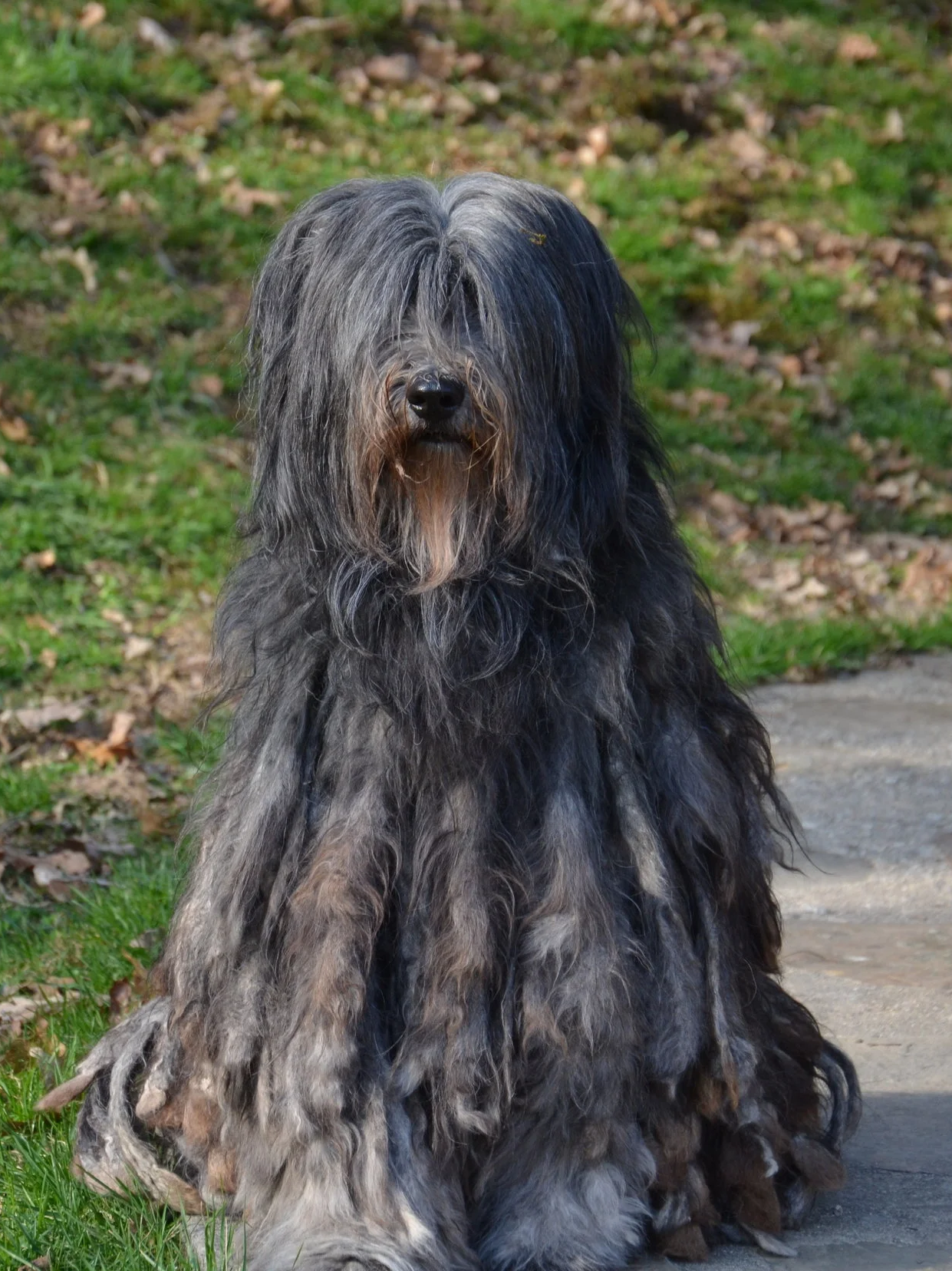
Adult greying female
Flocks can provide warmth, insulation & protection from elements

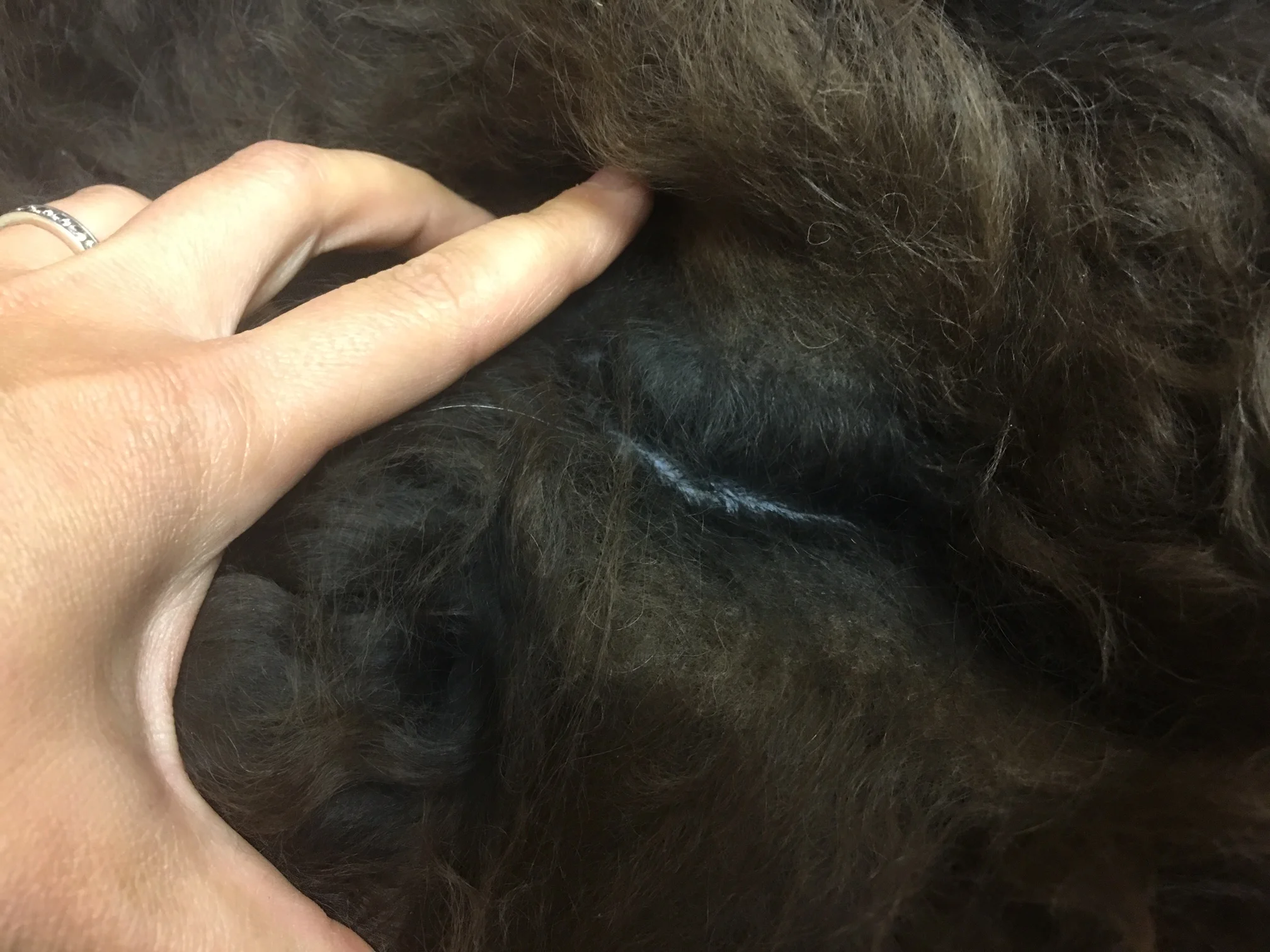


There is skin visible around each flock and it is not matted to the skin. There is a small space where the hair is not matted and allows for air circulation.
Although the Bergamasco coat is unique, it is not a wash-and-wear coat and it is not a coat that should be ignored. Proper coat development requires hands-on management at the right stages, and ongoing maintenance remains important throughout the dog’s life.
Variations of Coat and Color
These are some basic colors you will see. There are different variations of each not all shown here.

Merle
4 months old

Merle
adult male

Black
7 month old puppy

Black
adult male

Grey
Puppies born black, turning grey

Grey
Born black but greying, young female